What Can We Learn Through Artist Who Depict Jesus in Their Art
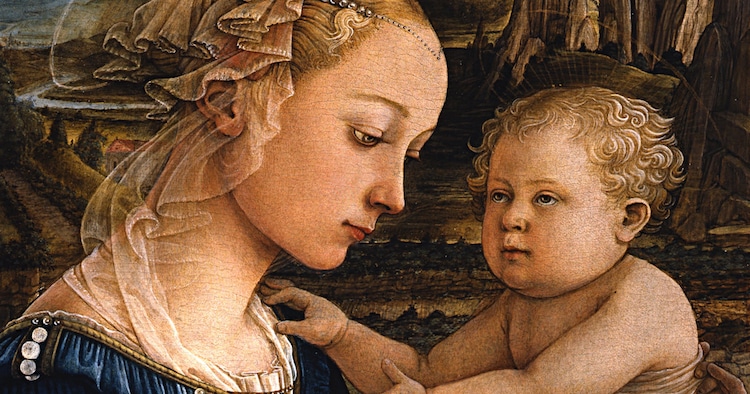
Images of the Madonna and Child—a championship that typically denotes a visual representation of the Virgin Mary and her infant son, Jesus—are among painting'southward most praised motifs. Originally an aboriginal devotional do stemming from biblical beliefs, artistically representing these figures has get a central theme in the canon of art history.
Given its longevity, it is no wonder that the tradition has evolved over time, culminating in a host of works that range from divine icons to down-to-world portrayals. Simply by observing the motif'southward office throughout history is ane able to fully grasp its significance—both in Christian art and beyond.
Who were Mary and Jesus?
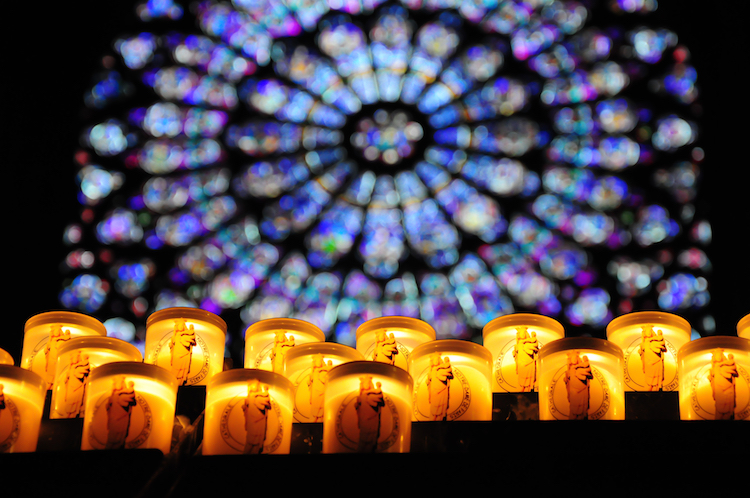
Interior of Notre-Matriarch Cathedral (Photo: Stock Photos from lilliputian photographer/Shutterstock)
According to Christian belief, Mary—a Galilean Jewish woman from Nazareth—was chosen by God to bear his only son, Jesus. The bible places emphasis on the fact that Mary was a virgin, impregnated not by her betrothed, Joseph, but by the Holy Spirit—a phenomenon that, according to the Gospel of Luke, perplexed even Mary herself.
"How will this happen?" she asked Gabriel, an archangel messenger sent past God to tell her the news. "I'm still a virgin!" The angel replied: " The holy spirit will come upon you lot . . . and the power of the Near High volition overshadow you. For that reason the holy one who is born from you lot will be called God'south Son."
Mary agreed to bear, birth, and enhance Jesus. Together, the pair is among Christianity's most venerated figures, making their perpetual presence in art no surprise.
General Representations of Madonna in Art

"The Virgin and Kid (The Madonna of the Book)" by Sandro Botticelli (Photo: Public domain via Wikimedia Commons)
Throughout art history, Madonna has been depicted in many ways. She is almost ever with Jesus, only there are instances in which she is alone—either in prayer, giving a blessing or a gesture of prophecy. Here are other formats:
- When the works include Jesus, Madonna can be seen equally a full-length figure holding the baby who raises his mitt in benediction, oft towards the viewer.
- In altarpieces, Madonna and Child will exist in the presence of angels or saints—referred to as "Madonna enthroned."
- At that place are other pieces, particularly created in the 14th century, in which Mary is sitting on the footing or a low absorber. Beyond those depictions, she can besides be seen seated (non on the ground) holding Jesus in a way that looks more maternal than formal.
- 1 manner called "Doting Madonna" is of Mary as she kneels in devotion to Christ. This format is typically painted on smaller altarpieces so that viewers could take it for their personal use.
- And finally, Mary is also seen doing what many mothers practise; at times, she is breastfeeding her child.
The Madonna and Kid in Art History
Ancient Rome
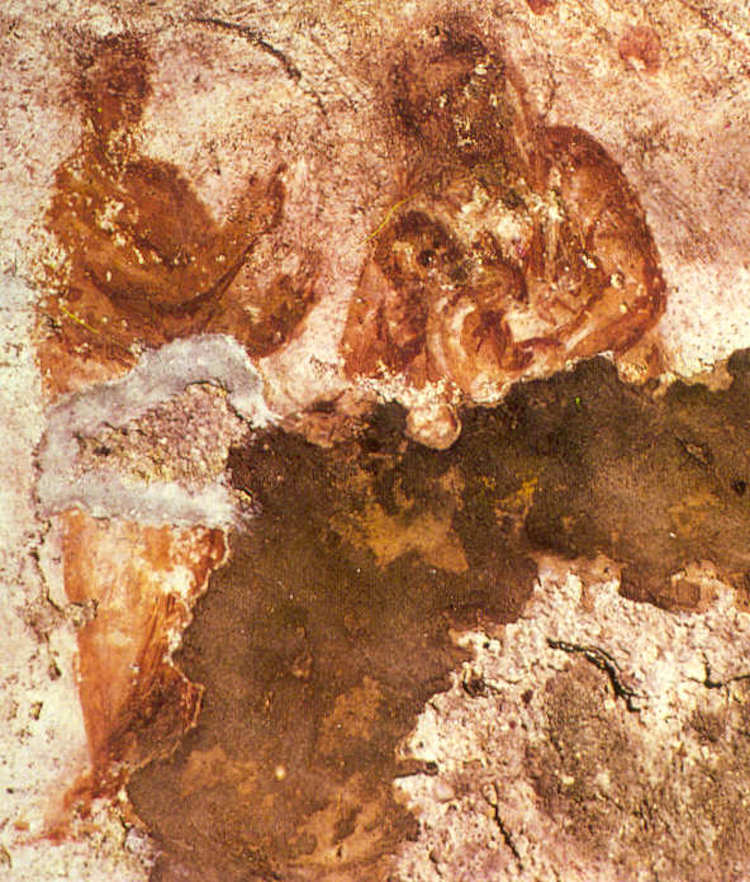
"Virgin and Child with Balaam the Prophet" in the Catacomb of Priscilla in Rome, late 2d century (Photo: Public domain via Wikimedia Commons)
Similar many other trends in fine art history, the Madonna (derived from the Italian term for Our Lady) and Kid tradition can be traced back to the Ancient Roman Empire.
The earliest known visual portrayal of Mary and the baby Jesus can be found in the Crypt of Priscilla, a quarry used for Christian burials in the late 2nd through quaternary centuries. This crypt is celebrated for its age-onetime wall and ceiling paintings, including a drove inspired by the bible. On top of tales from the Old Attestation, including the Binding of Isaac and the Last Judgment, the frescoes in its Greek Chamber tell stories from the New Testament—including, of class, the birth of Jesus.
The Catacomb of Priscilla also likely features the primeval known portrayal of an angel in art history. Together, these "firsts" go far among Christian fine art'due south nearly significant sites.
Byzantium

Icon of the enthroned Virgin and Kid with saints and angels in Saint Catherine's Monastery, 6th century (Photograph: Public domain via Wikimedia Eatables)
Following their fresco debut, the Madonna and Kid materialized equally encaustic (wax-based) and tempera (egg yolk-based) paintings. Rendered on wooden panels, these Roman Catholic icons often feature the somber-faced Mary and Jesus seated on a throne and flanked by as serious saints and angels. They were predominantly used for worship and are among Byzantine art's most prevalent works.
Medieval Europe
In the Heart Ages, artists adopted the Byzantine icon artful to craft their own style of panel painting. Italian painters similar Cimabue and Duccio created tempera portraits of Mary and Jesus that built upon the Byzantine model—peculiarly flat picture show planes, seated poses, and the use of gilt leaf, a medium whose popularity decreased as the Renaissance inched closer.
Early Italian Renaissance

Filippo Lippi, "Madonna With Child and Two Angels," ca. 1460-1465 (Photograph: Public domain via Wikimedia Commons)
In the 15th century, Italian painters and draftsmen began experimenting with realism in their work. This arroyo ushered in the Early Renaissance, an enlightened age of art that lasted from 1400 until 1490. During this time, artists looked dorsum to ancient times, culminating in a body of work that evokes Classical interests. While many masterpieces of the menstruum—including Primavera and The Nascency of Venus by Botticelli—retained the mythological subject thing favored by Classical artists, some feature naturalistic depictions of Mary (who appeared to adopt more engaged poses) and Jesus (who began to look more than baby-like).
Northern Renaissance
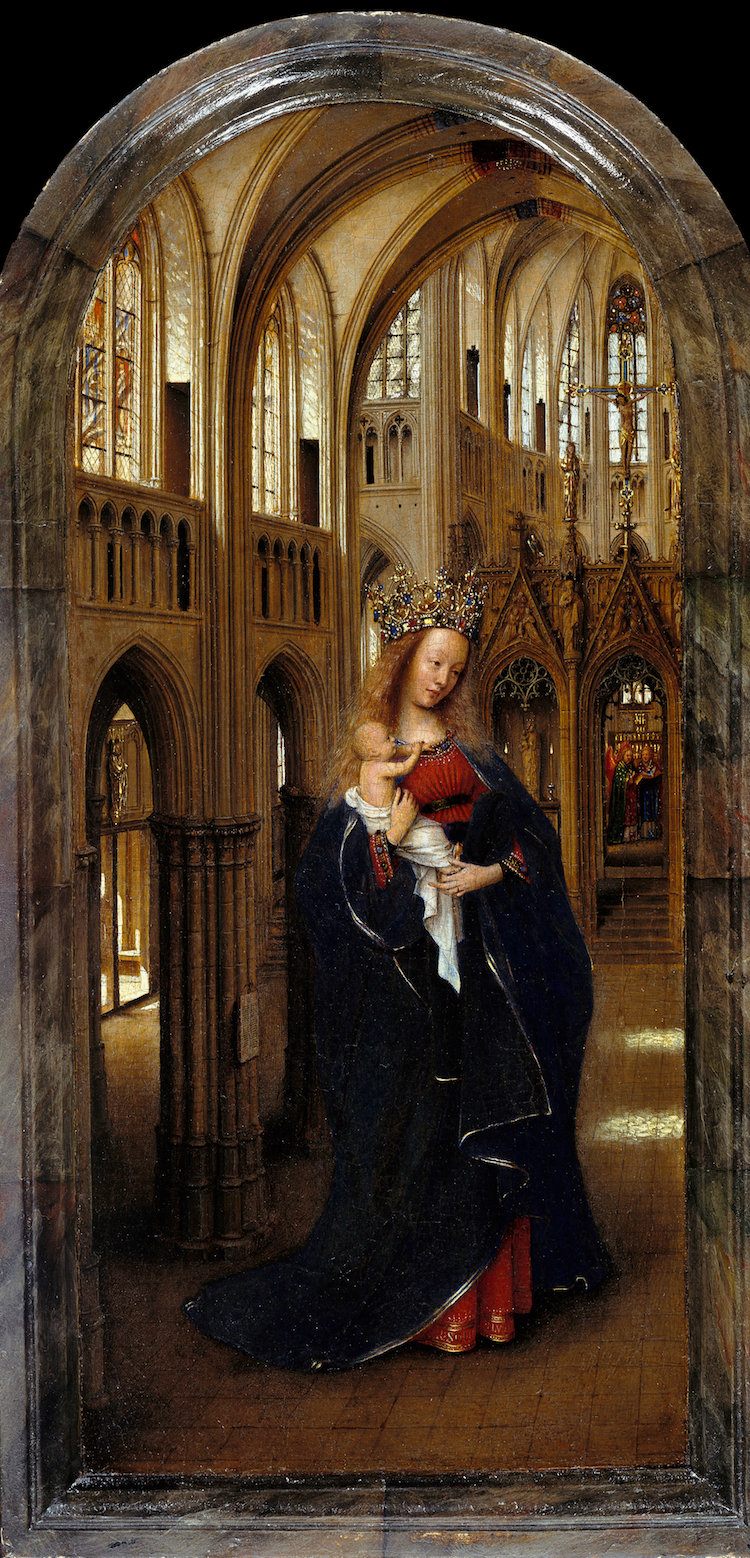
Jan van Eyck, "Madonna in the Church building" 1438 (Photograph: Public domain via Wikimedia Eatables)
Italian ethics gradually made their fashion across the continent, culminating in a Northern Renaissance. Based in the Depression Countries (kingdom of the netherlands and Belgium), Germany, France, and England, this move shares the Italian Renaissance's preference for realistic painting. In their impressions of the Madonna and Child, artists similar Jan Van Eyck and Robert Campin took this new approach, resulting in works that showcase an advanced sense of perspective, skilled methods of figure painting, and a radical interest in earthly settings.
Loftier Renaissance
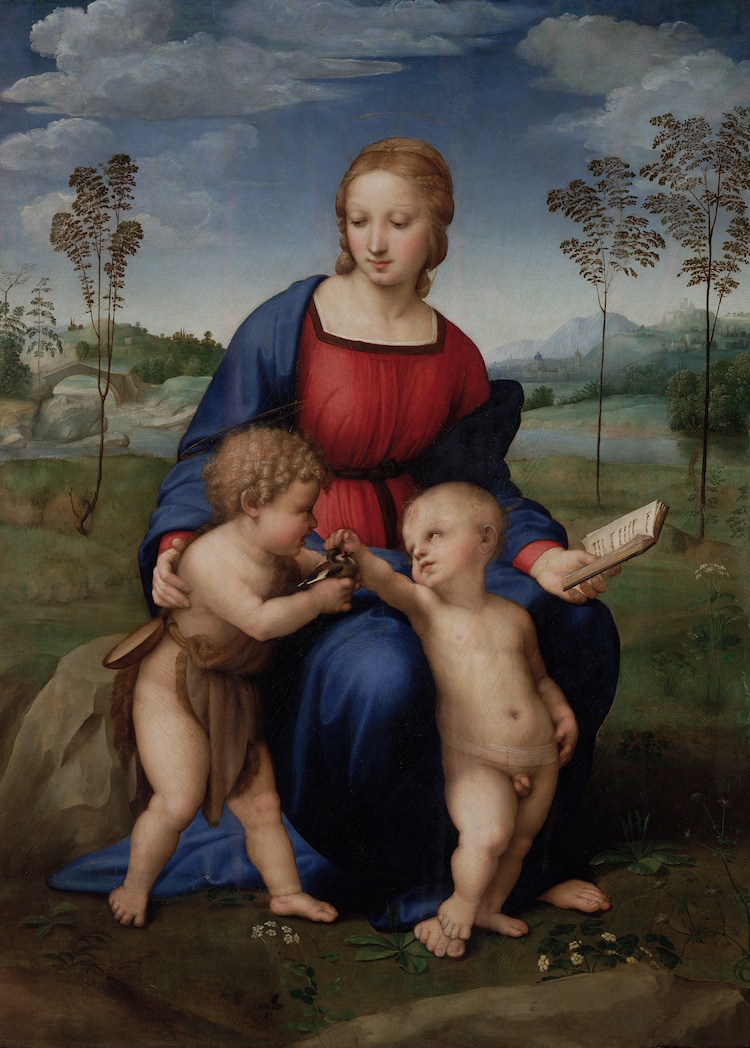
Raphael, "Madonna of the Goldfinch." ca. 1505-1506 (Photo: Public domain via Wikimedia Commons)
During the High Renaissance (1490 to 1527), Michelangelo, Leonardo da Vinci, Raphael, and other Italian artists took this renewed involvement in realism to new heights. No longer interested in mythological motifs, they shifted their focus to deputed portraiture, lifelike anatomical studies, and biblical figures—including an increasingly personable and naturalistic Madonna and Child.
Mughal Empire
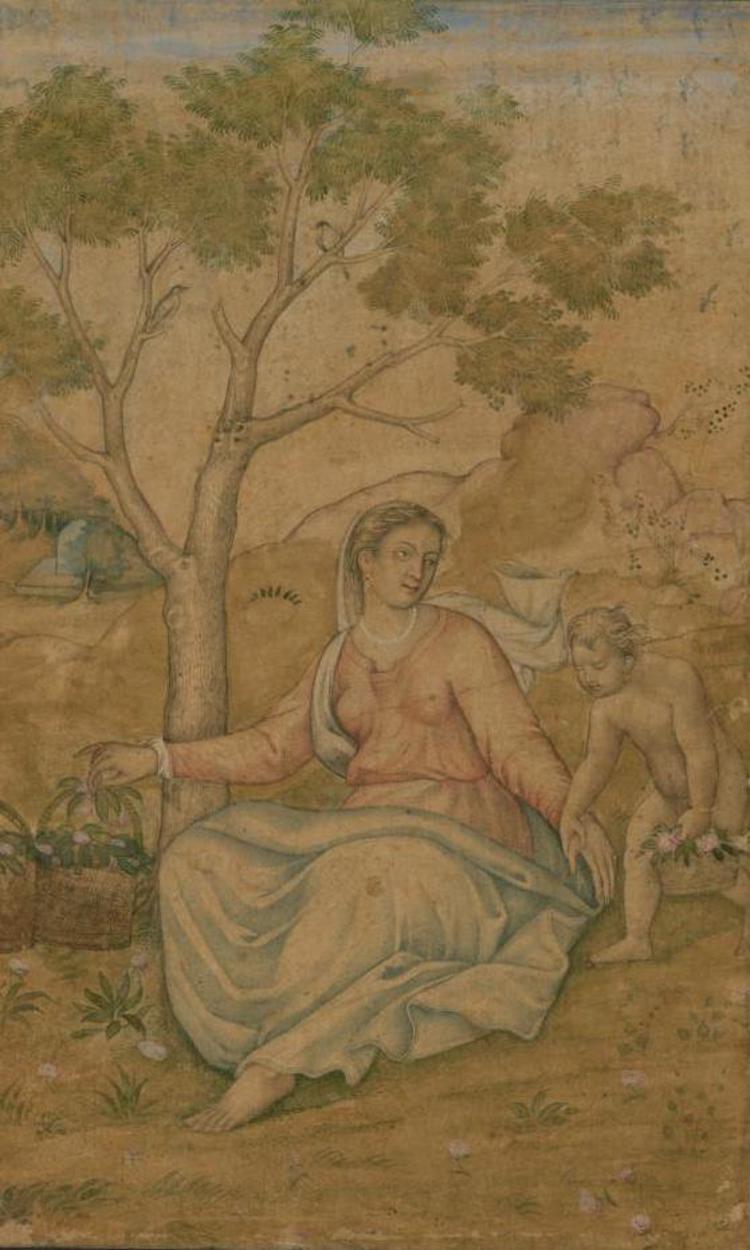
"Single Foliage of the Virgin and Child," 1600-1625 (Photograph: Public domain via Wikimedia Commons)
The Madonna and Child did not simply appear in Western fine art; they also served as a muse in Mughal painting. Why would classic Christian figures feature in Indo-Islamic art? According to the Metropolitan Museum of Art, in the 16th century, "numerous Christian subjects were copied by Indian artists working from the illustrated bibles, prints, and paintings that were brought to the Mughal courtroom by Jesuit missionaries and European traders." Additionally, the figures themselves are prominently present in both the Quran and Islam itself; Mary is believed to exist "above all the women of creation," while Jesus is viewed every bit the penultimate prophet and messenger of Allah.
Neoclassical France
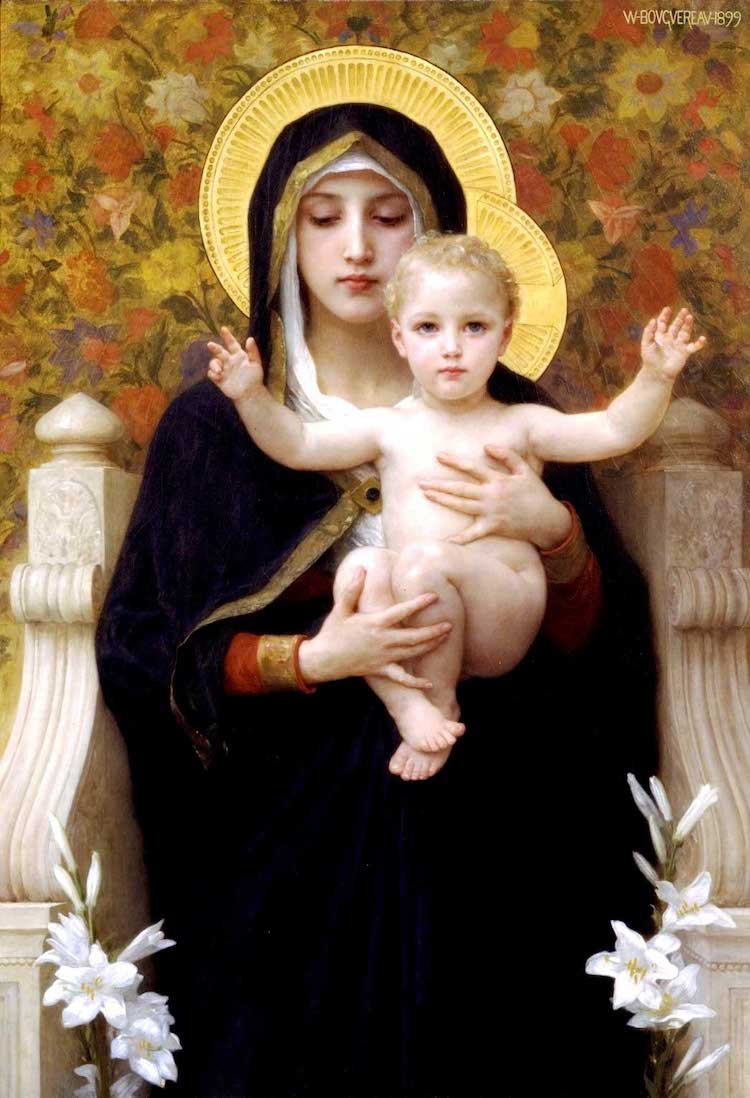
William-Adolphe Bouguereau, "Madonna with Kid," 1899 (Photograph: Public domain via Wikimedia Eatables)
This iconography remained popular throughout the Neoclassical menstruation, a movement inspired past classical art'south sense of balance and focus on the human effigy. While painters like William-Adolphe Bouguereau sought to modernize older subjects—including the Madonna and Child, who he imagined equally 19th-century figures in a stylized setting—their contemporaries were already crafting increasingly avant-garde interpretations.
Modern and Gimmicky Art
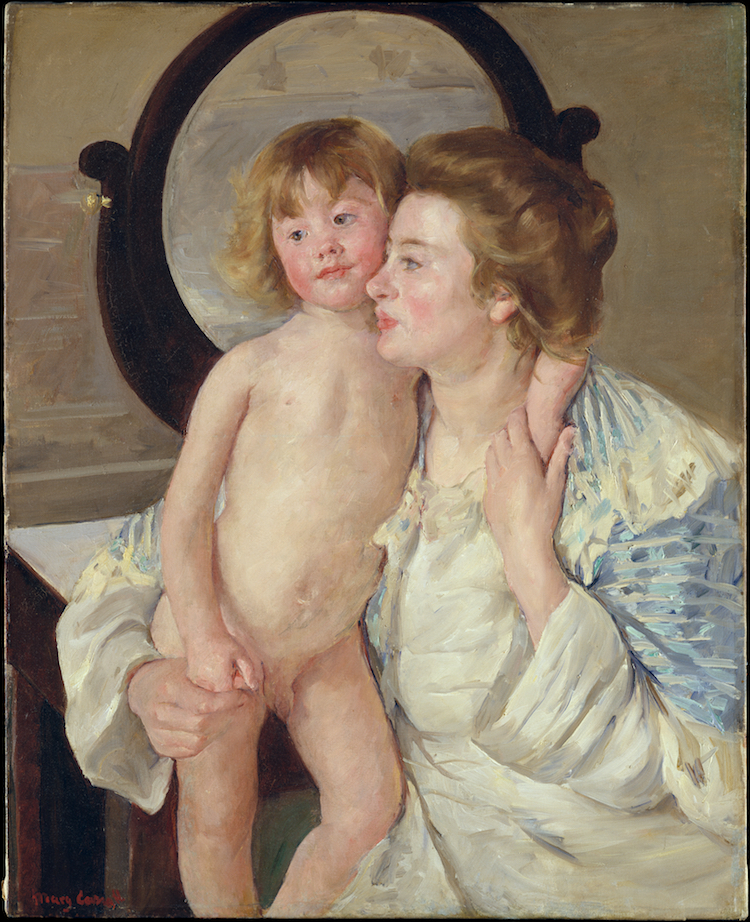
Mary Cassatt, "Mother and Child (The Oval Mirror)," ca. 1899 (Photograph: Public domain via Wikimedia Commons)
At the turn of the 19th century, American-born, Paris-based Impressionist Mary Cassatt subtly subverted traditional Madonna and Child criteria with Mother and Child (The Oval Mirror). At first glance, this mannerly piece looks like Cassatt's many other maternal portraits. What sets the painting autonomously, nevertheless, are some particularly discreet references. "The adult female'south doting expect and the boy'due south sweet face and contrapposto stance suggest Italian Renaissance images of the Virgin and Child," the Metropolitan Museum of Art explains, "a connectedness reinforced by the oval mirror that frames the boy'due south head like a halo."
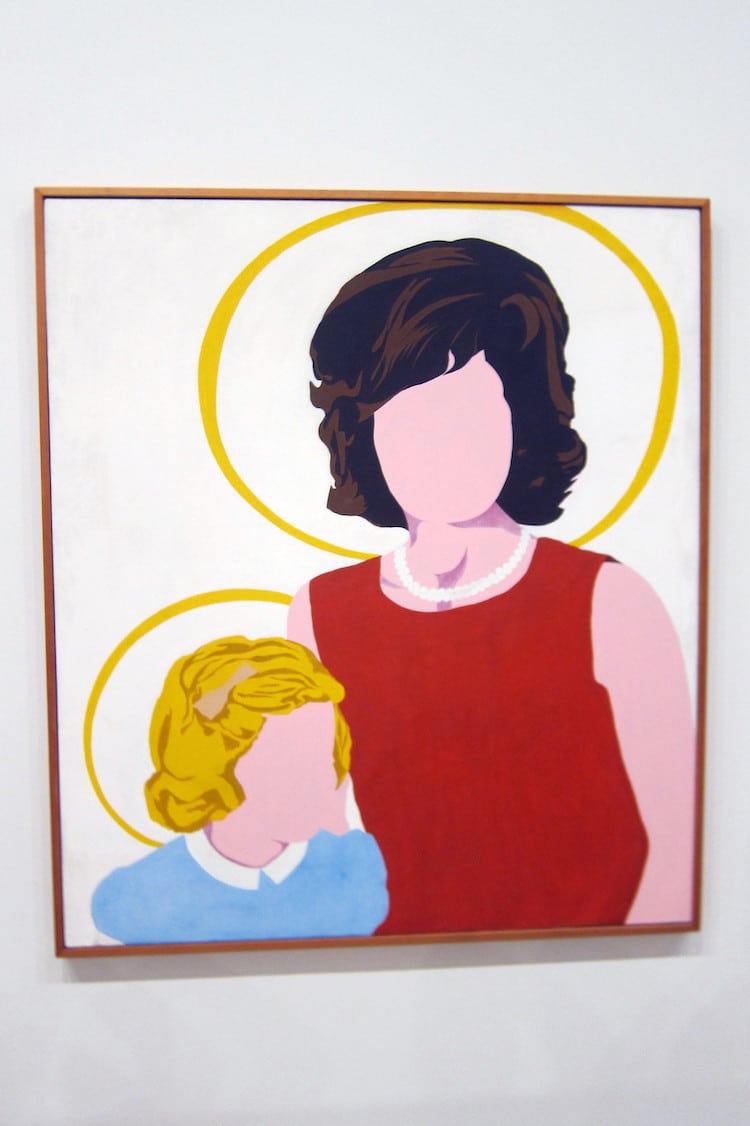
Allan D'Arcangelo, "Madonna and Child," 1963 (Photograph: Wally Gobetz [CC Past-NC-ND 2.0])
In addition to showcasing their own creative powers, these forwards-thinking artists accept revealed an important truth well-nigh the Madonna and Child: age-old iconography can be triumphantly timeless.
This article has been edited and updated.
Related Articles:
Fra Angelico and the Annunciation: How the Ethereal Event Inspired the Early Renaissance Artist
Exploring Michelangelo's 'Pietà,' a Masterpiece of Renaissance Sculpture
Dissecting Leonardo da Vinci'south Famous 'The Last Supper' Painting
The History of Cupid in Art: How the God of Love Has Inspired Artists for Centuries
Source: https://mymodernmet.com/madonna-and-child-art-history/
0 Response to "What Can We Learn Through Artist Who Depict Jesus in Their Art"
Post a Comment